Report of the General Board on the establishment of a Sainsbury Laboratory and three Professorships within the Laboratory:
Read the report.
Friday, January 29, 2010

Monday, November 30, 2009
Darwin's plants from the Beagle voyage
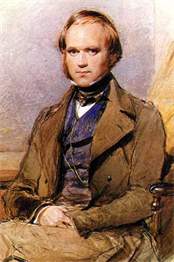
Darwin's Beagle Plants website (http://www.darwinsbeagleplants.org) was launched on Tuesday 24 November, the 150th Anniversary of the publication of "On the Origin of Species"? It was produced by the Herbarium and contains lots of information on the plants collected by Darwin. It is a major achievement by the Herbarium, and the Department.
Friday, November 27, 2009
800th anniversary lunch for staff with Her Majesty the Queen
A formal lunch was held at King's College on Thursday 19 November to celebrate long service to the University, attended by Her Majesty the Queen and His Royal Highness the Duke of Edinburgh. The 100 longest-serving University employees were invited to attend with their partners.
Three members of Plant Sciences attended; Glynn Jones, who joined the Department as a Scientific Assistant in 1967; John Green, who joined as a Scientific Assistant in 1968; and Sue Green, who was appointed as a Scientific Assistant in 1971. Maggie Goddard also attended the lunch with her husband Barrie, who joined Plant Sciences in 1963 as a Junior
Technician, before moving to the Department of Chemical Engineering in 2000.
Everyone thoroughly enjoyed the occasion. The Greens were slightly shocked to discover from the seating plan that they were sitting on the top table with the Queen, as the only married couple in the University both with long service. All those attending were given a commemorative book, marking the University's 800th anniversary.
Wednesday, November 4, 2009
IGEM team win prize

On 2nd November the Cambridge team was awarded the Grand Prize at the iGEM2009 Synthetic Biology competition finals at MIT (http://2009.igem.org). This was against stiff competition from over 100 teams in top international institutions. The students (Vivian Mullin, Alan Walbridge, Shuna Gould, Siming Ma, Mike Davidson, Megan Stanley and Crispian Wilson), provided a superb description of their work engineering DNA devices for transcriptional tuning and pigment production in environmental biosensors. As well as winning the overall prize for best project, the Cambridge team was awarded a gold medal, and trophy for the best project in the Environment Track.
View the photo album.
Article in Varsity Newsletter.
Wednesday, October 21, 2009
Natural Fibres in Construction: Innovative Applications and Processes
Free Seminar: 17 November 2009, Hughes Hall, Cambridge, 2:00pm- 5.30pm
Natural fibres have been utilised in construction for millennia, they have particular advantages for a low carbon future. The event, with speakers from academia and industry will focus on the technical aspects of utilising natural fibres in a modern context and provide a forum for the latest research on new natural composites. The Renewable House at the Buildings Research Establishment, (delivered by the NNFCC and funded by the Department of Energy and Climate Change DECC), and the Suffolk Housing Society development at Haverhill, are practical examples of the application of natural fibres. However these natural fibres have yet to enter mainstream application. Why is this? What are the opportunities and challenges facing natural fibres in construction?
Download the details.
£2 billion needed for science ’Grand Challenge’ to help feed the world
Professor Sir David Baulcombe has chaired a report for the Royal Society which says that the UK should lead international research efforts if we are to achieve the massive increase in food crop production (at least 50 percent) that will be required by 2050 to meet global food demands without damaging the environment.
Read the Report and the Press Release.
In the news:
The BBC
The Telegraph
The Times Online
The Guardian
The Independent
Radio 4
Read the Report and the Press Release.
In the news:
The BBC
The Telegraph
The Times Online
The Guardian
The Independent
Radio 4
Thursday, October 15, 2009
Proposal for Regius Professorship of Botany
There will be a discussion in the Senate-House, on Tuesday, 27 October 2009 to discuss the University's proposal to seek the assent of Her Majesty The Queen that the Professorship of Botany be re-titled the Regius Professorship of Botany, to commemorate the forthcoming visit by Her Majesty to the University on 19 November 2009 and the University's 800th anniversary year.
The University currently has six Regius Professorships: of Civil Law, Divinity, Greek, Hebrew, and Physic, all established in 1540; and of Modern History, established in 1724. Regius Professorships also exist at the Universities of Oxford, Edinburgh, Aberdeen, Glasgow, St Andrews, and Trinity College Dublin.
The Professorship of Botany, established in 1724, is one of the University's oldest unnamed Professorships in a fundamental scientific discipline. Although it was not established as a Regius Professorship, its early royal connections are clear: the third Professor, Thomas Martyn, received a patent from His Majesty King George III, and was styled by the Crown as 'our Public Professor or Reader of Botany'. His successor John Henslow, Professor of Botany, 1824-61, held the office of King's Reader by patent from the Crown while his appointment to the Professorship was under consideration.
As well as being an enduring memorial to Her Majesty's visit to the University, the Council and the General Board consider that renaming the Professorship would be particularly timely, given the University's leading role in the current international celebrations to mark the bicentenary of the birth of Charles Darwin, whose scientific mentor was Professor Henslow. The historical context of Darwin's scientific legacy is mirrored by the importance of the modern field of plant sciences in areas as diverse as food security, biodiversity, conservation, and medicine. Within the University a new Laboratory for fundamental research in plant sciences, generously funded by the Gatsby Charitable Foundation is currently under construction.
The current holder of the Professorship, Professor Sir David Baulcombe, FRS, has been consulted about the proposal which also has the support of the Head of the School of the Biological Sciences.
Subscribe to:
Posts (Atom)

 Posts

